Hydropower and the EU Taxonomy
Dipl.-Ing. Dr. Mario Bachhiesl
Within the scope of the EU Green Deal, the Regulation (EU) 2020/852 of the European Parliament and of the Council on the establishment of a framework to facilitate sustainable investment (“EU Taxonomy Regulation”) was adopted in 2020 as cornerstone for the further development of the EU Sustainable Finance Strategy. Subsequently, a constantly increasing significance of the EU Taxonomy can be observed as it aims to be the key facilitator for investments in our common sustainable future. The Taxonomy’s relevance for the renewable sector (including owners, operators, and suppliers) is multifold: new, legal requirements for non-financial reporting by companies have been created and the Taxonomy criteria are expected to be increasingly applied to various guidelines (e.g., for funding instruments or green bonds). Moreover, it seems likely that the perception of the public as well as of the financial sector regarding the sustainability of economic activities will largely be based on “taxonomy alignment”, i.e., whether such activities are classified accordingly to these criteria.
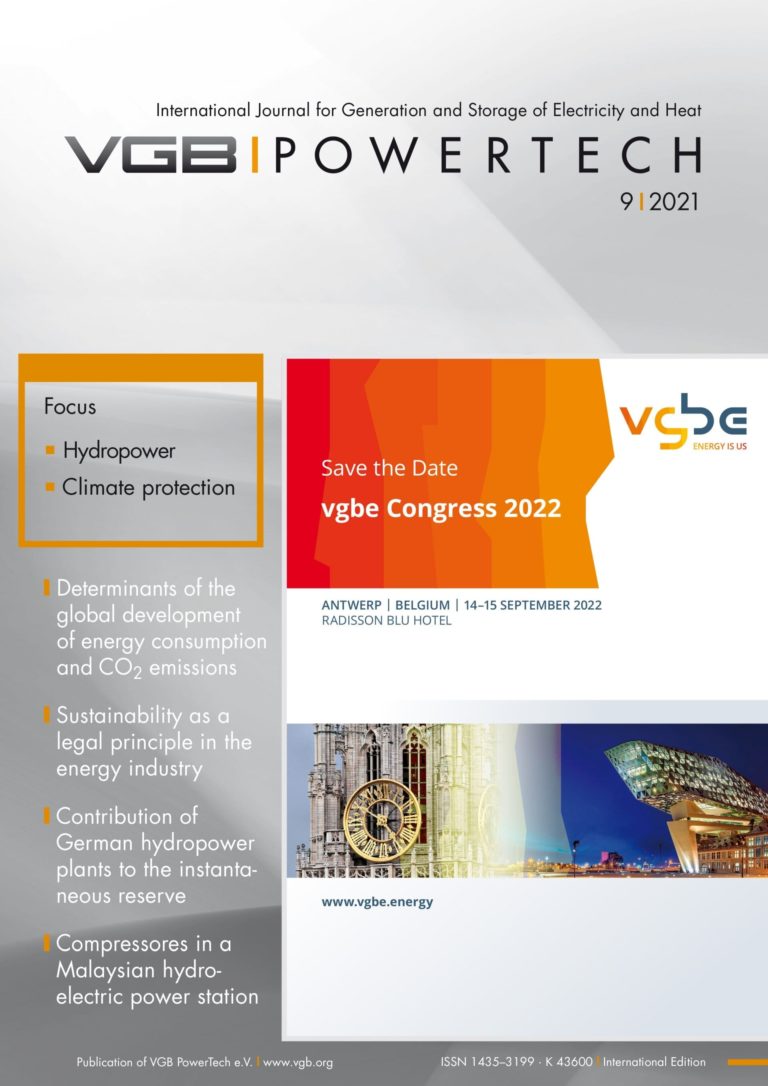
Determinants of the global development of energy consumption and CO2 emissions – Assessment of the impact of different instruments to comply with the Paris climate decisions and of border adjustment mechanisms to maintain the competitiveness of industry in the EU
Hans-Wilhelm Schiffer and Stefan Ulreich
Global CO2 emissions have risen continuously over the past three decades – interrupted only by two cuts in 2009 in the wake of the financial crisis and in 2020 as a consequence of the corona pandemic. This trend must be broken so that the Paris climate target can be achieved. In the Conferences of Parties of the United Nations, the countries have committed themselves to Nationally Determined Contributions to limit greenhouse gas emissions. An equal distribution of the remaining global greenhouse gas emission budget among the countries around the globe – calculated on a per capita basis – would not serve as a fair mechanism. A key instrument to solving the problem is an international agreement, at least among the G20, on the greatest possible harmonization of CO2 pricing. This approach is also superior to the Carbon Border Adjustment Mechanism proposed by the EU Commission, which aims to create a border taxation to avoid carbon leakage. In the private sector, the transition to low-carbon technologies should be promoted through additional economic incentive mechanisms. Im Fazit wird eine international vergleichbar hohe Bepreisung von CO2 als Lösungsansatz zur Schaffung eines Level-Playing-Fields befürwortet.
Sustainability as a legal principle in the energy industry
Hans-Peter Schwintowski
On 04.06.2021, the European Commission presented a draft Delegated Regulation (DV) defining the technical assessment criteria for sustainability. In this way, it is to be determined whether an economic activity – for example of a gas-fired power plant – contributes significantly to climate protection and prevents climate change. The DP is to come into force on 01.01.2022. The DP is to come into force on 01.01.2022. It would then be binding in all its parts and directly applicable in all EU Member States. The IR is an important building block for bringing sustainability in the sense of the Taxonomy Regulation (TVO) to life. There, the term sustainability is defined in Art. 3. The IR to be presented here deals with the technical assessment criteria that ultimately determine whether a company – and thus also an energy producer or a network or storage operator – is considered sustainable within the meaning of the TVO.
Contribution of German hydropower plants to the instantaneous reserve
Martin Knechtges and Albert Moser
The structural change towards climate-neutral electricity generation is changing the generation structure in Germany and Europe. This leads to a reduction of the rotating masses due to the elimination of fossil and nuclear power plants and thus of their stabilising instantaneous reserves. In order to limit frequency deviations and gradients after disturbances to a permissible level in the future, the transmission system operators are increasingly focusing on the available instantaneous reserve of the remaining generation plants. Thus, hydropower plants also continue to provide instantaneous reserve. This study therefore quantifies the contribution of German hydropower plants to frequency stabilisation. The contribution of German hydropower plants to the instantaneous reserve is based on two criteria: Firstly, the kinetic rotational energy stored in the hydropower plants – as a measure of the instantaneous reserve. On the other hand, under the idealised assumption that the instantaneous re-serve is distributed evenly in proportion to the respective load in the European interconnected grid, the share of a power deficit attributable to Germany or Bavaria is determined, which the instantaneous reserve of the hydropower plants in Germany or Bavaria, together with the self-regulating effect of the German or Bavarian load, is still able to compensate without violating permissible frequency deviations and gradients. The investigations prove that the kinetic rotational energy of the German hydropower plants is comparable to that of a large nuclear power plant. The instantaneous reserve of the German hydropower plants alone, together with the self-recovery effect of the German load, allows for the control of a disturbance event in which Germany would have a power deficit of 463 MW to be compensated.
Malaysisches Wasserkraftwerk vertraut auf Sauer Compressors
The “tiger state” of Malaysia is emancipating itself from fossil energies and has commissioned the Ulu Jelai Power Station. The hydro storage power station is successfully making its contribution to covering the peak load and stabilising the power grid. Sauer Compressors is part of this sustainable showcase project with its powerful compressors. The compressors produce the compressed air used to blow the water out of the turbines.
The operator of the Ulu Jelai Power Station, which opened in 2016, is Tenaga Nasional Berhad, the only energy provider in Malaysia and one of the largest in Asia. The hydro storage power station with a maximum capacity of 372 MW is located about 150 kilometres north of the capital Kuala Lumpur in the Cameron Highlands District. A 460-metre-long and 88-metre-high dam holds back the water brought in from three rivers. In times of increased energy demand, the water is released from the reservoir and directed to turbines that drive generators to produce electrical energy.
Plant twin or older sister?
Uwe Vogt
Nothing is as constant as change – power plants are subject to many changes over their long life cycle. Quality and the effort required for maintenance and conversions therefore depend heavily on a reliable as-built status of the system documentation. One of many reasons for Aucotec AG to develop a data-centred engineering platform. All core disciplines of plant planning are united and networked in a central data model in the Engineering Base (EB) cooperation platform. On the one hand, the system enables devices in the field to directly inform their digital twin when they are changed or replaced. On the other, every change made at one point in the documentation also appears immediately in all other representations – and without additional interfaces or transmissions. This enables unprecedented continuity, parallelism and agility in editing as well as simultaneous consistency for all parties involved.
Fossil fuel-based energy storage
Qian Zhu
As the penetration of variable renewable energy (VRE) such as solar and wind power increases, energy storage is needed for the successful development of a resilient and flexible electricity network. Energy storage systems can provide services to support the grid and address some of the new challenges that increasing VRE introduces into the power system. There has been a significant increase in the application of utility-scale energy storage systems in many regions. This fast growth rate of the deployment of grid storage is set to continue. . Total global installed energy storage capacity was about 186.1 GW in 2020. Energy storage can operate as a standalone system or be co-located with power generation facilities. There is an option with coal power plants to integrate a storage system with generating units to obtain some operational advantages and benefits such as improved flexibility. Integration with energy storage could also eliminate the need for excessive flexible operation of coal power plants, enabling them to operate at optimal output and efficiency with reduced environmental impacts. R&D of hybridising energy storage and fossil-fuelled power plants have been conducted for decades. In 2020, the US-DOE announced federal funding of up to $ 6 million for cost-shared R&D projects under its Energy Storage for Fossil Power Generation programme to explore technology approaches to integrate fossil fuel assets with potential energy storage applications.
Computational heat transfer analysis of tubes and tube bundles with supercritical water as coolant
Kashif Tehseen, Kamran Rasheed Qureshi, M. Abdul Basit, Rab Nawaz, Waseem Siddique and Rustam Khan
This work provides a complete study of the effects of orientation of core on heat transfer in SCW along bare circular tubes and tube bundles. Numerical simulations are performed using ANSYS FLUENT 14.0 for a range of inlet temperatures along both vertical as well as horizontal bare tubes using RNG k-ε turbulence model with enhanced wall treatment (y+<1) and the results are validated against the results present in literature. abgeglichen. Phenomena of heat transfer enhancement and heat transfer deterioration are studied along with the effects of buoyancy and flow direction. The effects of change in length and diameter of the heated tube on heat transfer in SCW are also investigated. Numerical simulations for tube bundles are performed and results have been compared for vertically upwards, vertically downwards and horizontal orientations of core and the regions of maximum temperatures have been identified using temperature profiles at different locations in tube bundles. To reduce the computational cost, half symmetry is used for simulations of horizontal flows.
Editorial
Hydropower and the EU Taxonomy
Dear ladies, dear gentlemen,
Within the scope of the EU Green Deal, the Regulation (EU) 2020/852 of the European Parliament and of the Council on the establishment of a framework to facilitate sustainable investment (“EU Taxonomy Regulation”) was adopted in 2020 as cornerstone for the further development of the EU Sustainable Finance Strategy. Subsequently, a constantly increasing significance of the EU Taxonomy can be observed as it aims to be the key facilitator for investments in our common sustainable future. The Taxonomy’s relevance for the renewable sector (including owners, operators, and suppliers) is multifold: new, legal requirements for non-financial reporting by companies have been created and the Taxonomy criteria are expected to be increasingly applied to various guidelines (e.g., for funding instruments or green bonds). Moreover, it seems likely that the perception of the public as well as of the financial sector regarding the sustainability of economic activities will largely be based on “taxonomy alignment”, i.e., whether such activities are classified accordingly to these criteria.
The EU Taxonomy Regulation is complemented by the Delegated Act on Climate Change (C/2021/2800 final), which sets out the technical screening criteria. These criteria are used to determine under which conditions an economic activity is considered to make a significant contribution to climate change mitigation or adaptation, and to determine whether that economic activity does not cause significant harm to any of the other environmental objectives.
In respect of a level playing field for all renewable energy technologies, hydropower has to fulfil significantly more criteria, some of which even have to be verified by external parties. This leads to an additional administrative as well as financial burden for hydropower.
The new Technical Screening Criteria and the Do No Significant Harm criteria (DNSH) on climate change mitigation as well as on climate change adaptation for electricity generation from hydropower are inadequate for direct use and application. This is mainly due to the fact that the Commission Delegated Regulation does not take into account the complexity and multipurpose use of hydropower generation and storage facilities, and simultaneously introduces new terms that have previously neither been defined in EU legislation nor in technical standards.
Therefore, VGB PowerTech e.V. (VGB), representing the hydropower industry, initiated an in depth-discussion across the sector to achieve both: a common understanding as well as aligned interpretations of the new definitions. In addition, VGB is currently developing a VGB Interpretation Note “EU Taxonomy & Hydropower: Criteria on Climate Change Mitigation as well as on Adaptation” as a first step within this dialogue. With this document, VGB will propose definitions and boundaries for numerous terms, such as electricity generation facility, run-of-river hydropower plant, artificial reservoir, pumped storage hydropower plant, river body, power density, refurbishment as well as installation, maintenance and repair. Hints for the interpretation of the DNSH criteria 1 to 6 are also given.
With this interpretation note, VGB aims to improve and enable the applicability of the EU Taxonomy. Draft definitions and guidance for the application of the EU Taxonomy sustainability criteria are to facilitate a proper and swift application of the Technical Screening Criteria and of the DNSH Criteria on climate change mitigation as well as on the adaptation for hydropower generation and storage. As the Taxonomy and its criteria are dynamic, it can be assumed that the VGB Interpretation Note will continue to be updated in the future based on experience made with first applications of the rather complex and detailed requirements involved.
Considering the practice-oriented VGB Interpretation Note as a very essential contribution to the applicability of the EU Taxonomy Regulation, we would like to thank all our hydropower members involved in the joint preparation of this important note.